
Fall 2026 Lunch Lectures
View the Fall 2026 lecture schedule here >> . Lectures are held on Tuesdays.
Recorded videos played "full screen" will display properly.
↓ Scroll down ↓ to see detailed lecture information for each speaker. Lunch served at noon (while supplies last), talks are from 12:30-1:30pm.

Culture Changes Us: How Stories Work on Hearts, Minds & Bodies
Heidi J. Boisvert
Chair, School of Arts, Entertainment & Creative Technologies, Georgia Tech
September 29, 2026
12:00 p.m. Lunch (while supplies last); 12:30 p.m. talk starts
Location: Tech Square Clubhouse
Abstract: Dr. Heidi Boisvert will share case studies of past pop culture campaigns employing emerging technology to advance social issues in co-creative partnership with social justice organizations as well as her research methods and insights from the Limbic Lab, which employs biometrics, machine learning and predictive models to isolate effective narrative ingredients across various mediums of expression. She will also detail how this feedback loop between creative practice, tool-building, empirical research and community-engagement informs her vision for the new School of Arts, Entertainment and Creative Technologies.
Bio: Heidi Boisvert (PhD) is an interdisciplinary artist, experience designer, creative technologist, and academic researcher who interrogates the neurobiological and socio-cultural effects of media and technology. Simply put, she studies the role of the body, the senses, and emotion in human perception and social change. Boisvert is currently mapping the world's first media genome, while taking great care with its far-reaching ethical implications. She founded futurePerfect lab, a creative agency and think-tank that works with social justice organizations to design playful emerging media campaigns to transform the public imagination. She also co-founded XTH, a company creating novel modes of expression through biotechnology and the human body. Presently, she is working with David Byrne on Theater of the Mind, a new immersive theater piece. Boisvert is the Chair of the new School of Arts, Entertainment and Creative Technologies in the College of Design. She is also a Senior Research Fellow at the Norman Lear Center, a research affiliate in the Open Documentary Lab at MIT and a member of NEW INC’s Creative Science track.

Beyond Words: Building Shared Understanding through Bidirectional Human-Robot Communication
Na Du
Assistant Professor, Department of Informatics and Networked Systems, University of Pittsburgh
September 22, 2026
12:00 p.m. Lunch (while supplies last); 12:30 p.m. talk starts
Location: Tech Square Clubhouse
Abstract: As robots increasingly enter homes, workplaces, and assistive settings, they must understand how people naturally communicate and interact in order to collaborate effectively with diverse users. This talk presents a program of research on multimodal and social human-robot interaction that investigates how humans and robots establish shared understanding and adapt their communication to one another. First, I describe our work on multimodal human-to-robot communication through speech, gaze, gesture, and embodied behavior. We show that people often rely on nonverbal cues, particularly gaze, to clarify underspecified verbal instructions. Building on these findings, we develop a gaze-aware multimodal instruction-understanding model to improve target-object grounding and intent understanding. Second, I present a set of studies on robot-to-human communication. These studies examine how robots can establish shared context, align task goals with diverse users, and adapt communication strategies to users' states and interaction contexts. I conclude with implications and open directions for building human-aware robots to support natural, effective, and inclusive human-robot collaboration.
Bio: Na Du is an Assistant Professor in the Department of Informatics and Networked Systems, School of Computing and Information at the University of Pittsburgh. Her research interests include human factors in intelligent systems, human-agent teaming, and interaction design, with applications spanning robotics, transportation, healthcare, and other intelligent systems. She is a recipient of several prestigious awards, including the NSF CAREER Award, HFE Women Rising Star Award, and Best Paper Awards from HRI and HFES international conferences. She earned her Ph.D. in Industrial & Operations Engineering from the University of Michigan in 2021.
Our apologies. Recorded video not available due to a technical issue.
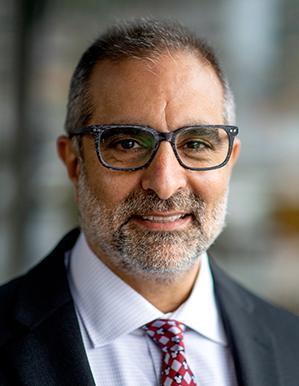
Looking Backwards to Surge Forwards: What 40 years as a researcher has taught me
Gregory Abowd
Professor of Electrical and Computer Engineering at Northeastern University; Former Dean of Engineering at Northeastern
September 15, 2026
12:00 p.m. Lunch (while supplies last); 12:30 p.m. talk starts
Location: Tech Square Clubhouse
Abstract: Gregory D. Abowd is a Professor of Electrical and Computer Engineering at Northeastern University. From March 2021-June 2026, he was the Dean of Engineering at Northeastern, where he oversaw the global growth of the college and launched several curricular and research initiatives. Prior to joining Northeastern in March 2021, he was on the faculty in the School of Interactive Computing at the Georgia Institute of Technology for 26.5 years. In his time at Georgia Tech, Dr. Abowd initiated bold and innovative research efforts, such as Classroom 2000 and the Aware Home, as well as pioneering innovations in autism and technology, health systems, and a joint initiative with engineering in computational materials and sustainable electronics. He was on the founding editorial board of IEEE Pervasive Computing Magazine, and was founding Editor-in-Chief of Foundations and Trends in HCI and The Proceedings of the ACM in Interactive, Mobile, Wearable, and Ubiquitous Technologies (IMWUT). He also founded the non-profit Atlanta Autism Consortium in 2008 to serve and unite the various stakeholder communities in Atlanta connected to autism research and services. Dean Abowd’s contributions to the fields of Human-Computer Interaction and Ubiquitous Computing have been recognized through numerous awards from ACM and ACM SIGCHI, including the 2023 Lifetime Research Award from ACM SIGCGHI. In 2025, he was elected into the American Academy of Arts and Sciences and in 2026 he was elected into the National Academy of Inventors. He has graduated 39 Ph.D. students, the majority of whom have gone on to successful careers at top universities around the world. Dr. Abowd received the degree of B.S. in Honors Mathematics in 1986 from the University of Notre Dame. He then attended the University of Oxford in the United Kingdom on a Rhodes Scholarship, earning the degrees of M.Sc. (1987) and D.Phil. (1991) in Computation.

Your Trash Is a National Asset. The Engineering Challenge Hiding in Every Waste Stream
ARTHUR C HUANG
CEO and Co-founder of MINIWIZ
September 1, 2026
12:00 p.m. Lunch (while supplies last); 12:30 p.m. talk starts
Location: Tech Square Clubhouse
Abstract: This year, one of MINIWIZ's decentralized upcycling systems lands at Georgia Tech, live, running on waste generated right here. That's not a future vision or a distant case study, it's down the hall. For 21 years we've been finding ways to turn trash into products, work that today spans 18 countries. It taught us something we didn't expect starting out: the hard part was never turning waste into a product. It was turning waste into a product people actually want. Simple, well made, good looking, priced right, at the scale of real architectural or medical grade products. Nail the engineering and skip the design, and you get a demo nobody buys. Nail the design and skip the engineering, and you get a prototype that never reaches the people who need it. Solve both and something changes at a level bigger than any one product: waste stops being a liability and becomes a domestic resource, hiding in plain sight. Come see what that actually looks like, not the pitch version, the one running on this campus.
Bio: Arthur Huang is a structural engineer, architect, and circular economy innovator who serves as the CEO and Co-founder of MINIWIZ, a global leader in transforming post-consumer waste into retail interiors, architectural structures, and consumer goods. Educated at Harvard University (MArch II) and Cornell University (BArch), Huang has also shared his expertise through teaching positions in architecture at Cornell, NCTU, Tung Hai, and NCKU. For over a decade, he has focused on accelerating the shift to a closed-loop circular economy, earning his company prestigious accolades such as the World Economic Forum’s (WEF) Technology Pioneer Award, the Financial Times' Earth Award, and the Wall Street Journal's Asian Innovation Award. A National Geographic Explorer since 2016, Huang was recognized as the runner-up for the 2019 WEF Circular Leadership Award, while MINIWIZ was concurrently named by the WEF as one of the top 11 companies leading the global transition to a circular economy.